Testing whether social signals change donation behavior.
This quantitative research coursework project studied whether seeing other people donate in a social feed could influence a participant’s willingness to donate.
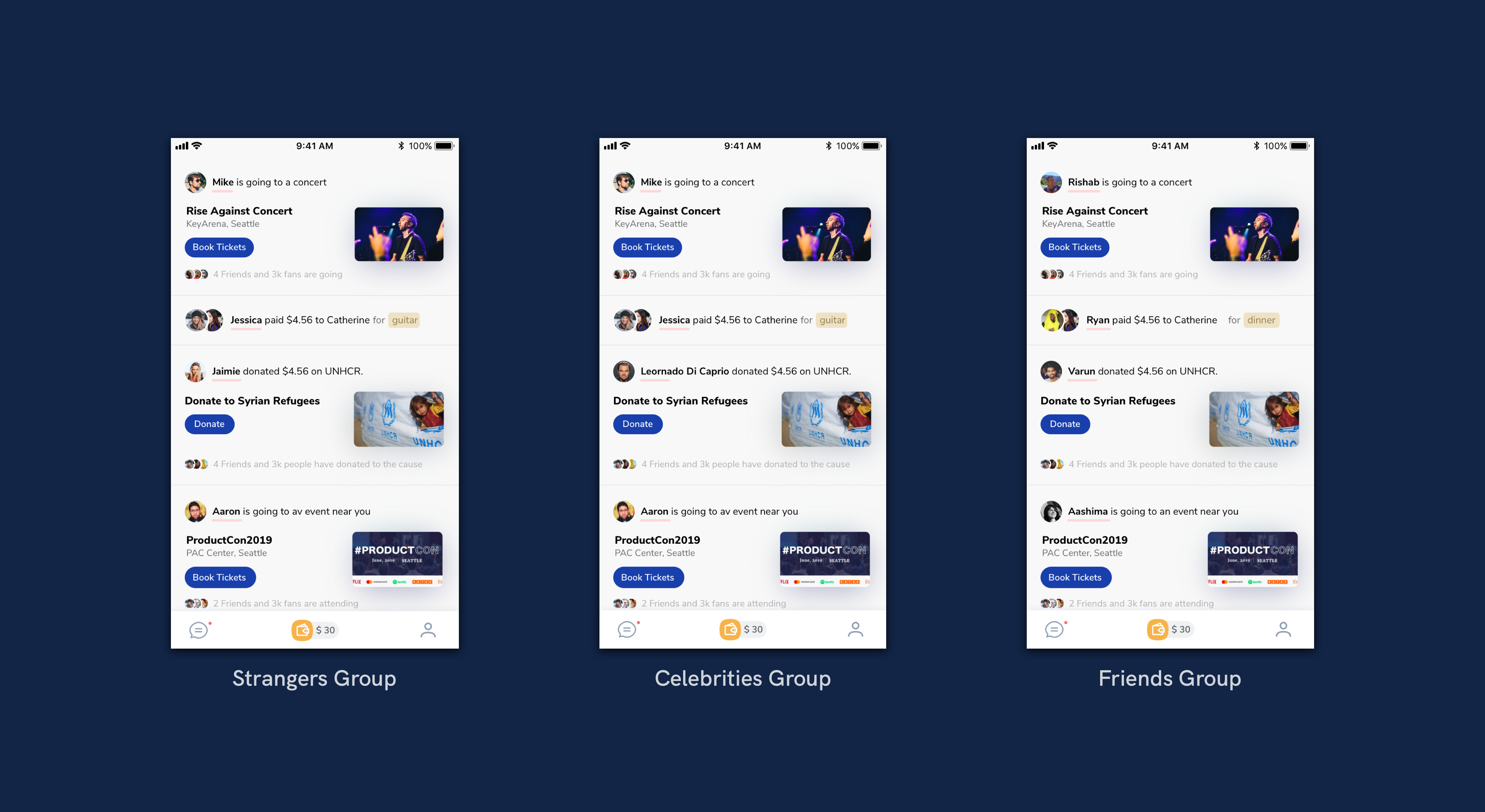
We created a fictional payments app prototype called PayNoww, gave participants a virtual balance, and tested whether peer, celebrity, or stranger donation signals changed donation behavior.
How might seeing charity donations from different users in a social newsfeed affect a person’s willingness to donate?
Variables and hypotheses
Independent variable
Donation source
Friends, influencers, or strangers in the social feed.
Dependent variable
Donation willingness
Measured through whether a participant chose to donate.
Dependent variable
Donation amount
Measured in dollars from the participant’s virtual wallet.
Hypothesis
The presence of donations from friends would increase the likelihood that a participant chose to donate. The null hypothesis was that donations from friends would not change likelihood of donation.
Experiment design
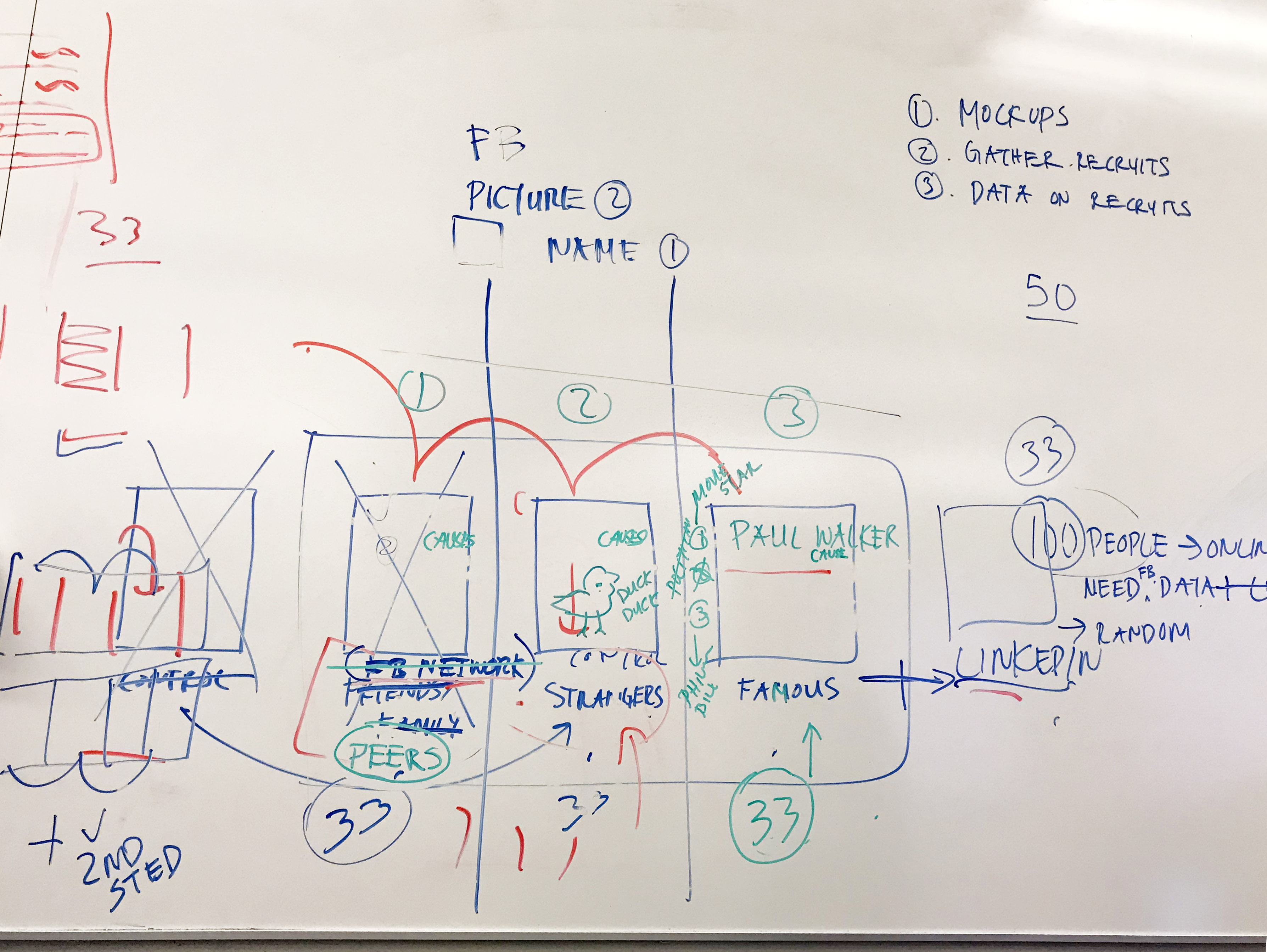
Participants received a Google Sites page containing instructions, a pre-survey, a Maze prototype link, and a post-survey. Each PayNoww account was credited with USD 30, then participants interacted with one of three prototype variants.
Maze tracked interactions to verify that participants moved through the prototype, including click behavior and completion timing.
Prototype variants
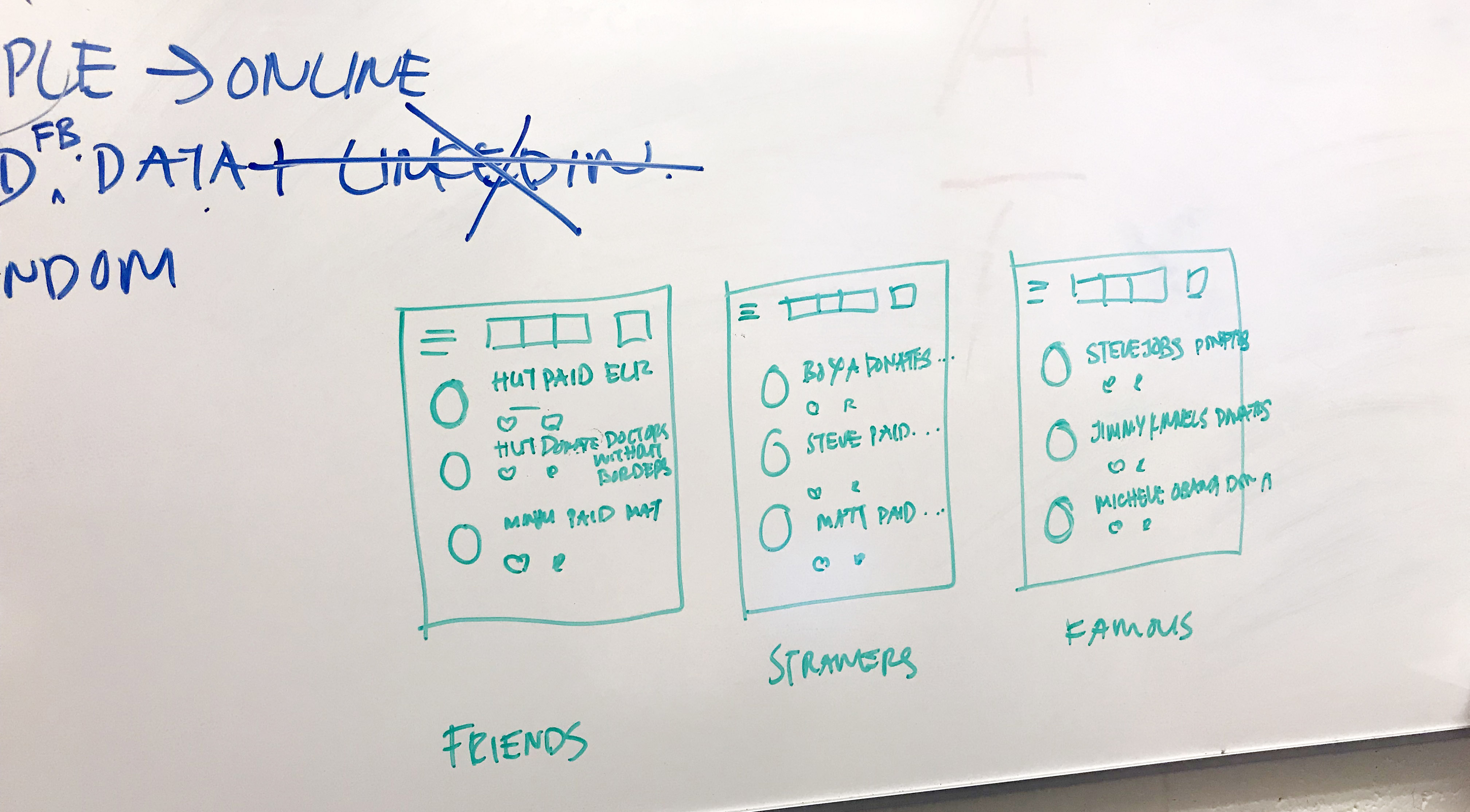
- Strangers in the feed donating or booking events
- A Facebook friend donating to the cause
- A celebrity philanthropist donating to the cause
Response filters
- One response per participant account
- One response per IP address
- Participants restricted to U.S. and Indian citizens over 18
- Participants randomly assigned to one of three prototype groups
Method selection and results
The study examined 30 participants divided into three groups of 10. We used a chi-square test for donation willingness and a one-way ANOVA for donation amount.
Chi-square test
p-value = 0.62
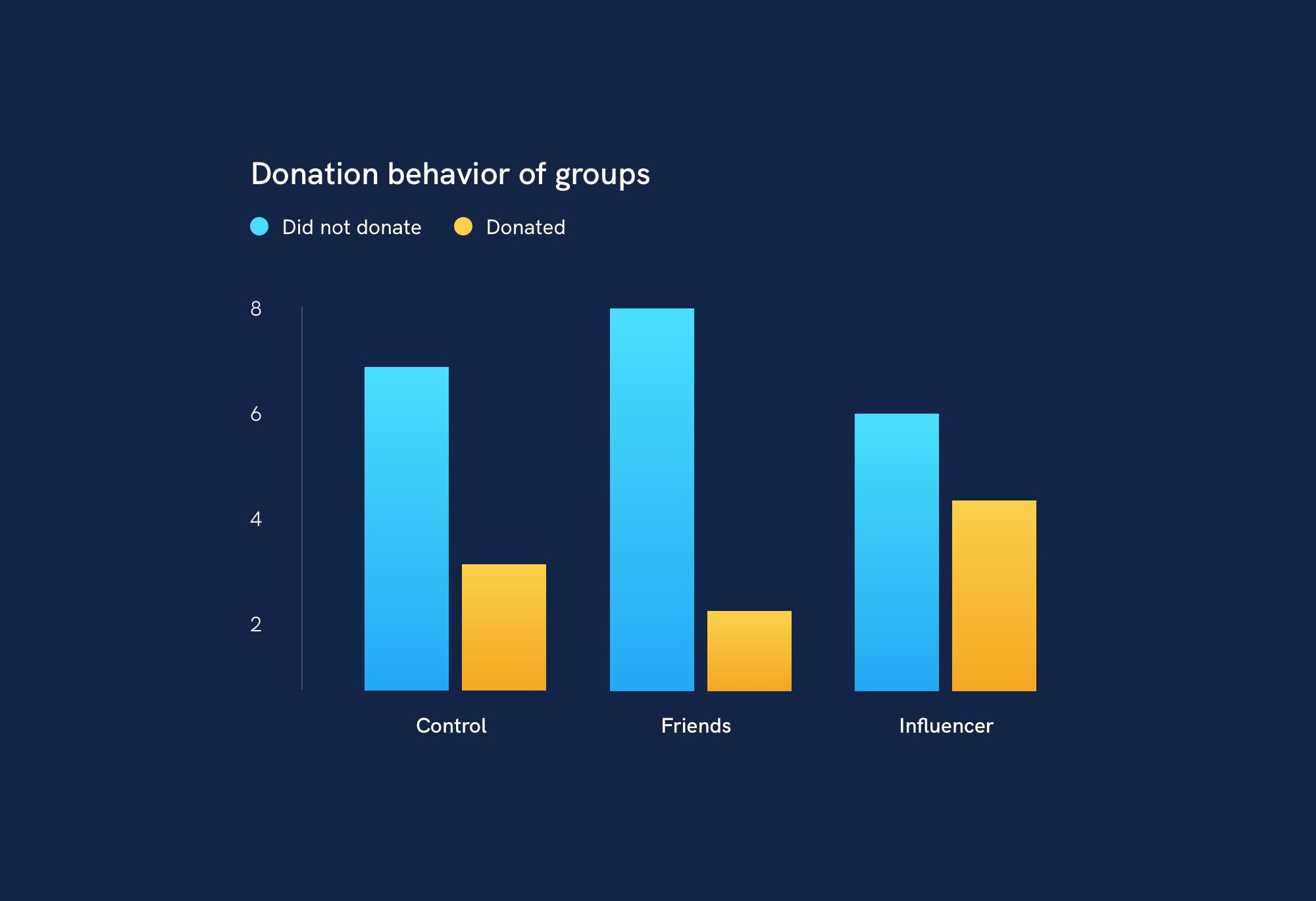
The willingness-to-donate difference between groups was not statistically significant, though the influencer group had the highest donation count.
One-way ANOVA
p-value = 0.71
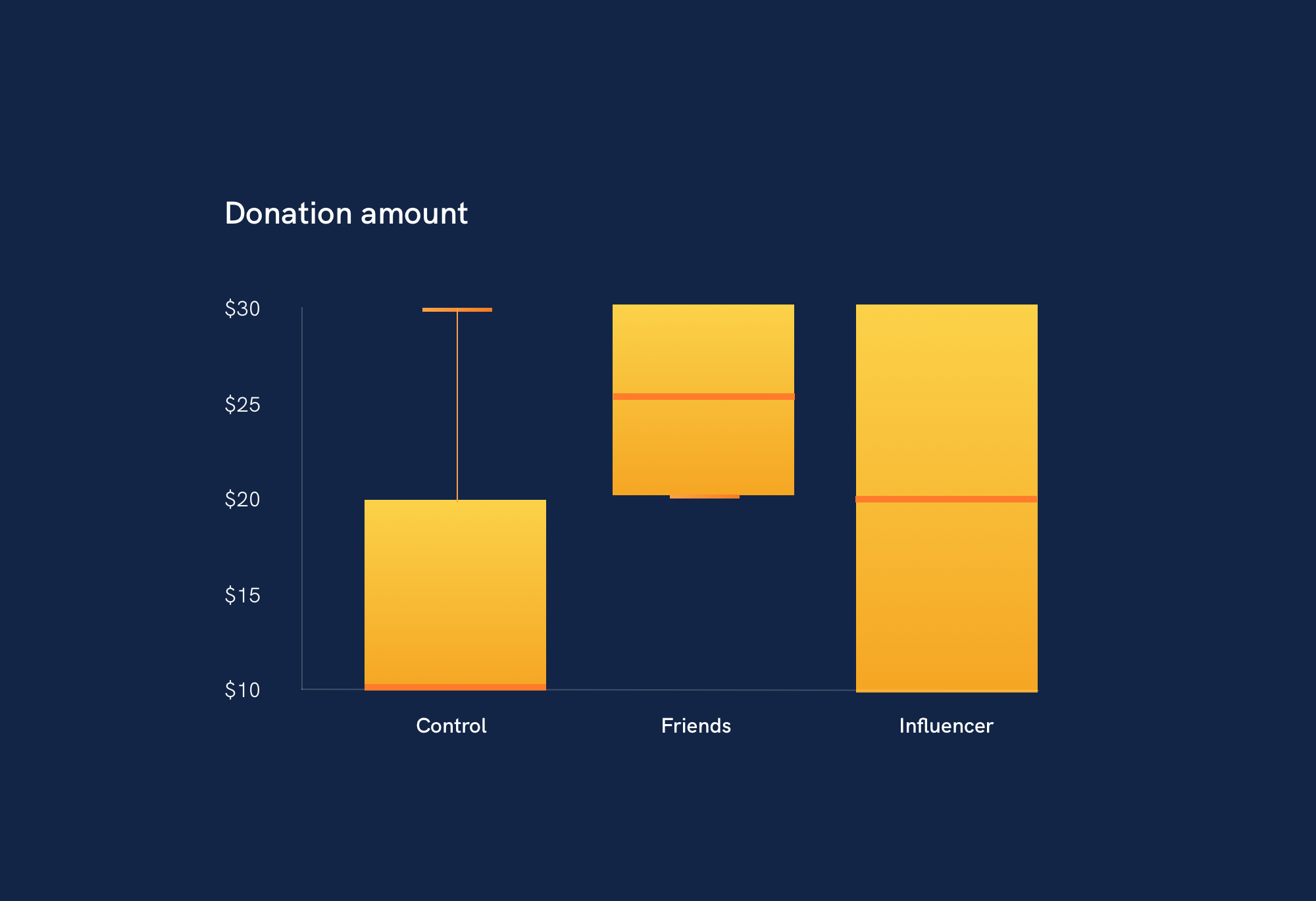
Donation amounts also did not differ significantly, though participants in the friends group donated a higher amount descriptively.
Limitations and discussion
The study did not find statistically significant effects for peer or celebrity donation signals, but the result should be treated cautiously. Prior research has suggested social influence can matter in charitable giving; our prototype and sample may not have been strong enough to capture that effect.
We used one Facebook friend as the peer endorsement. Future work could test whether multiple peer endorsements, stronger relationship ties, or repeated exposure changes donation willingness or attitudes toward the charity.