Walmart Labs internship
Solving a 6D pricing problem in a 2D interface
During my UX Design internship at Walmart's home office in Bentonville, I worked on an internal web app for Walmart buyers: the people responsible for managing product portfolios and making pricing decisions at scale.
The work combined domain research, buyer interviews, synthesis, prototyping, and visual design. The result was a concept for a pricing decision system that helped buyers understand portfolio relationships, build lines and ladders, and preview the impact of price changes before taking action.
9
Research interviews across buyers and adjacent personas
5
Walmart buyers interviewed directly
3
Follow-up usability tests with prototype flows
6D
Pricing problem compressed into a 2D decision interface
Project overview
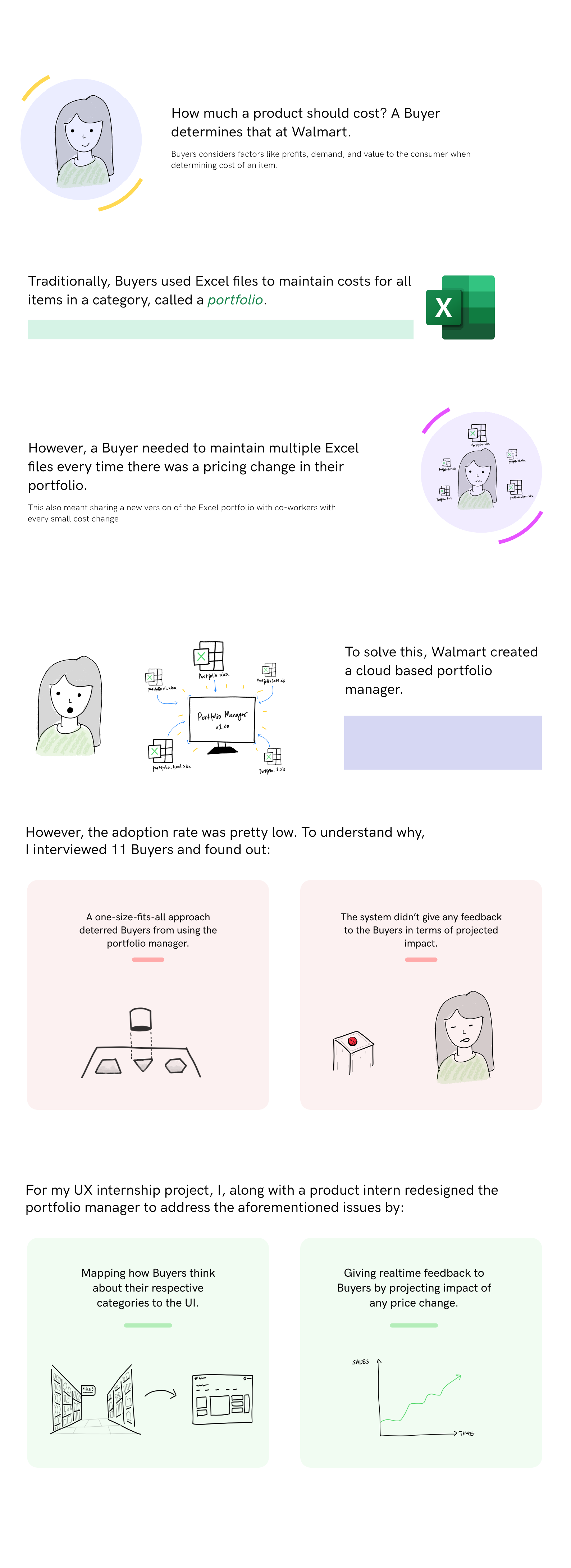
Walmart buyers make high-stakes pricing decisions across large product portfolios. They balance customer value, supplier negotiations, margins, competitive pricing, item relationships, and category strategy. The challenge was not simply to display more data. It was to help buyers make sense of a dense decision space without forcing them back into spreadsheets.
I partnered with a product intern to create a system from scratch. My role covered the full UX process from understanding merchandising as a domain to designing and testing an interactive prototype.
My responsibilities
- Built domain understanding through secondary research on merchandising, EDLP, and EDLC.
- Planned and conducted buyer interviews, secondary-persona interviews, and follow-up usability tests.
- Synthesized portfolio-pricing workflows into lines, ladders, item relationships, and pricing propagation models.
- Created interactive prototypes and visual designs for an internal pricing decision system.
Understanding the domain
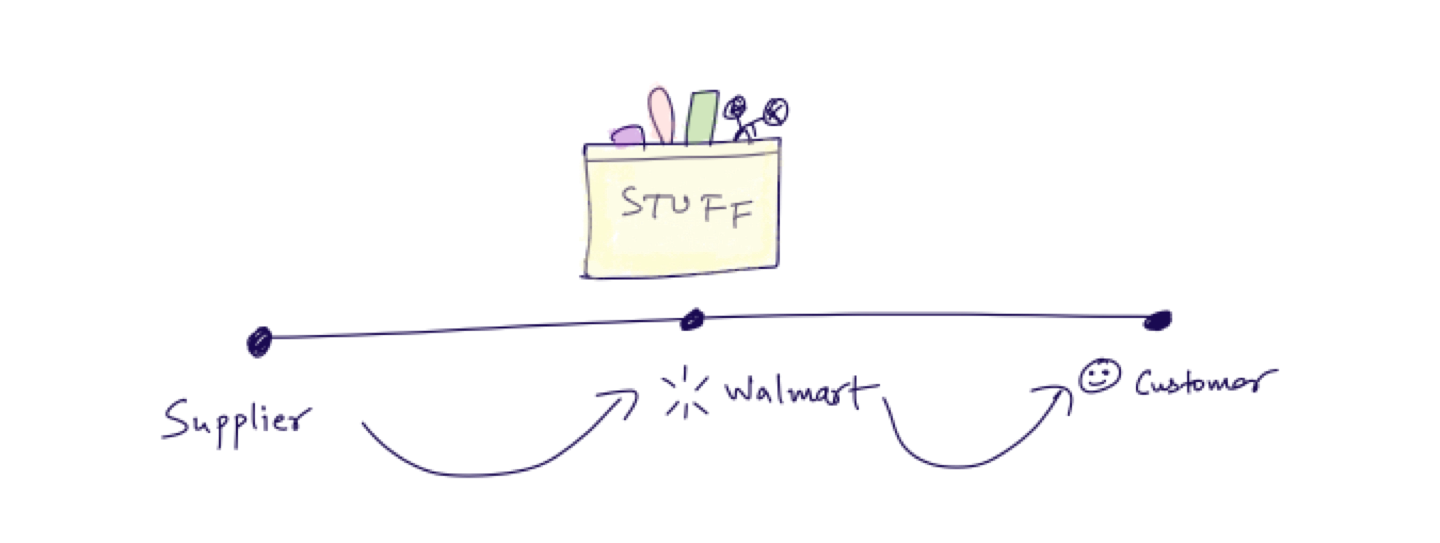
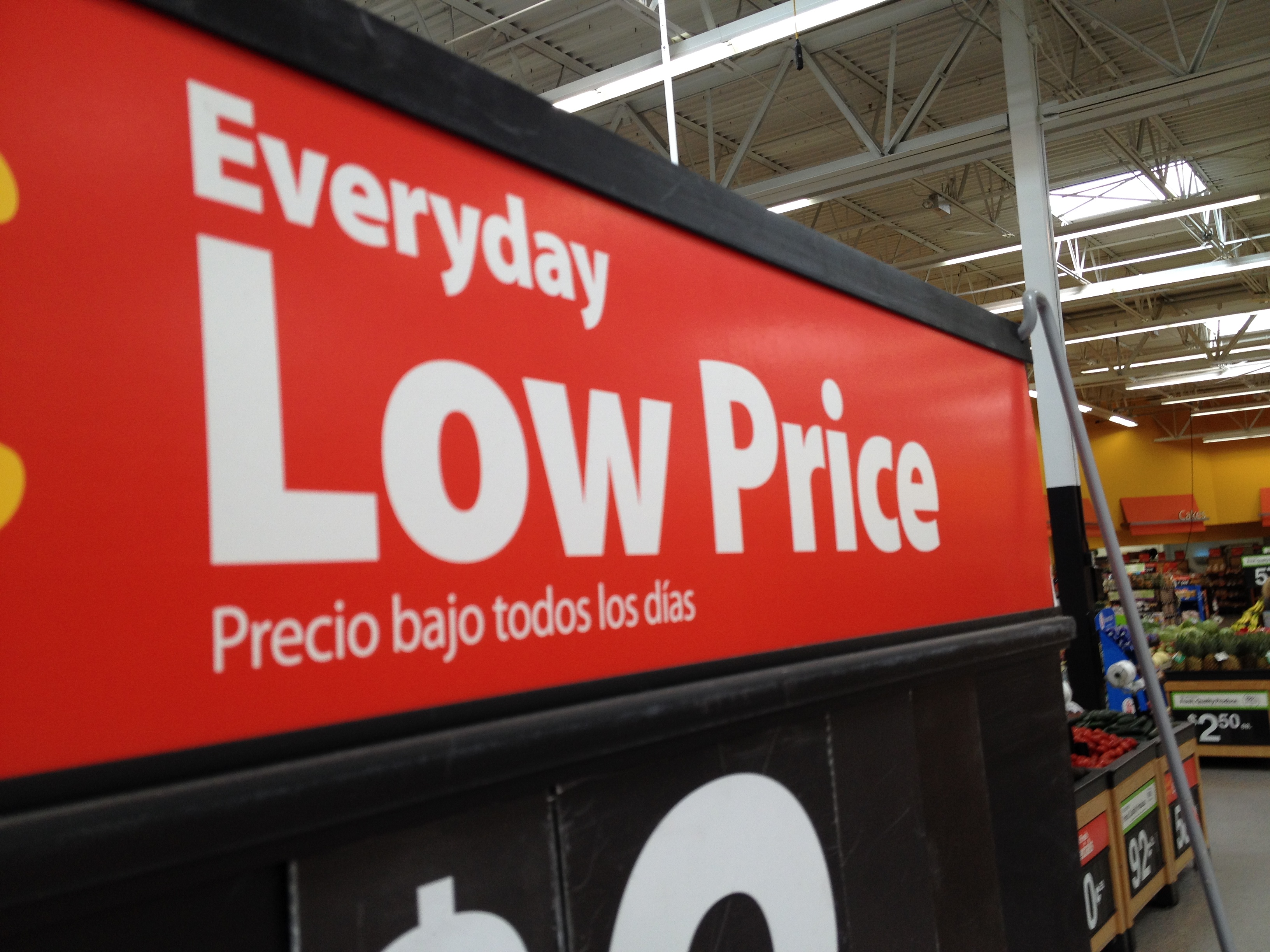
I had no prior exposure to merchandising, so I started by unpacking Walmart's retail language. Merchandising is the work of selling products at retail, and pricing sits at the center of that work. Walmart's customer promise of Everyday Low Prices is backed internally by Everyday Low Cost, where buyers negotiate supplier cost and maintain portfolio strategy.
This context mattered because buyer tools are not neutral data systems. They encode how Walmart thinks about value, consistency, trust, and competitive positioning.


Primary persona: the buyer
Interview quote
"Being a Buyer is as much art as it is science."
Buyer interviewed during research
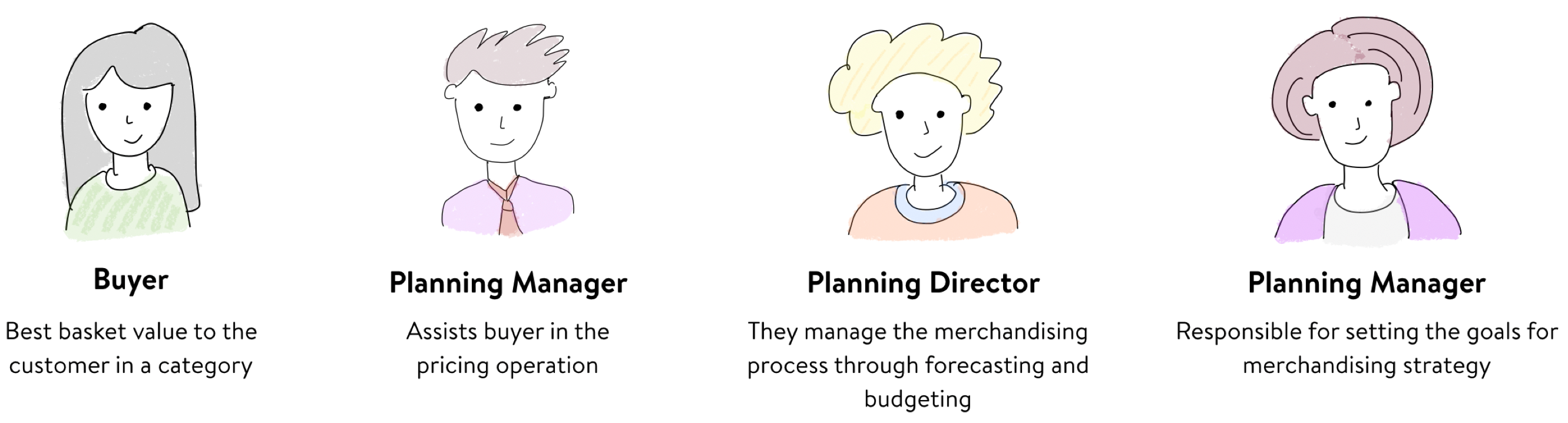
A buyer's job is to create the best basket value for Walmart customers. They develop strategy for a category or portfolio, select items, negotiate with suppliers, and set prices in a way that supports both EDLP and EDLC.
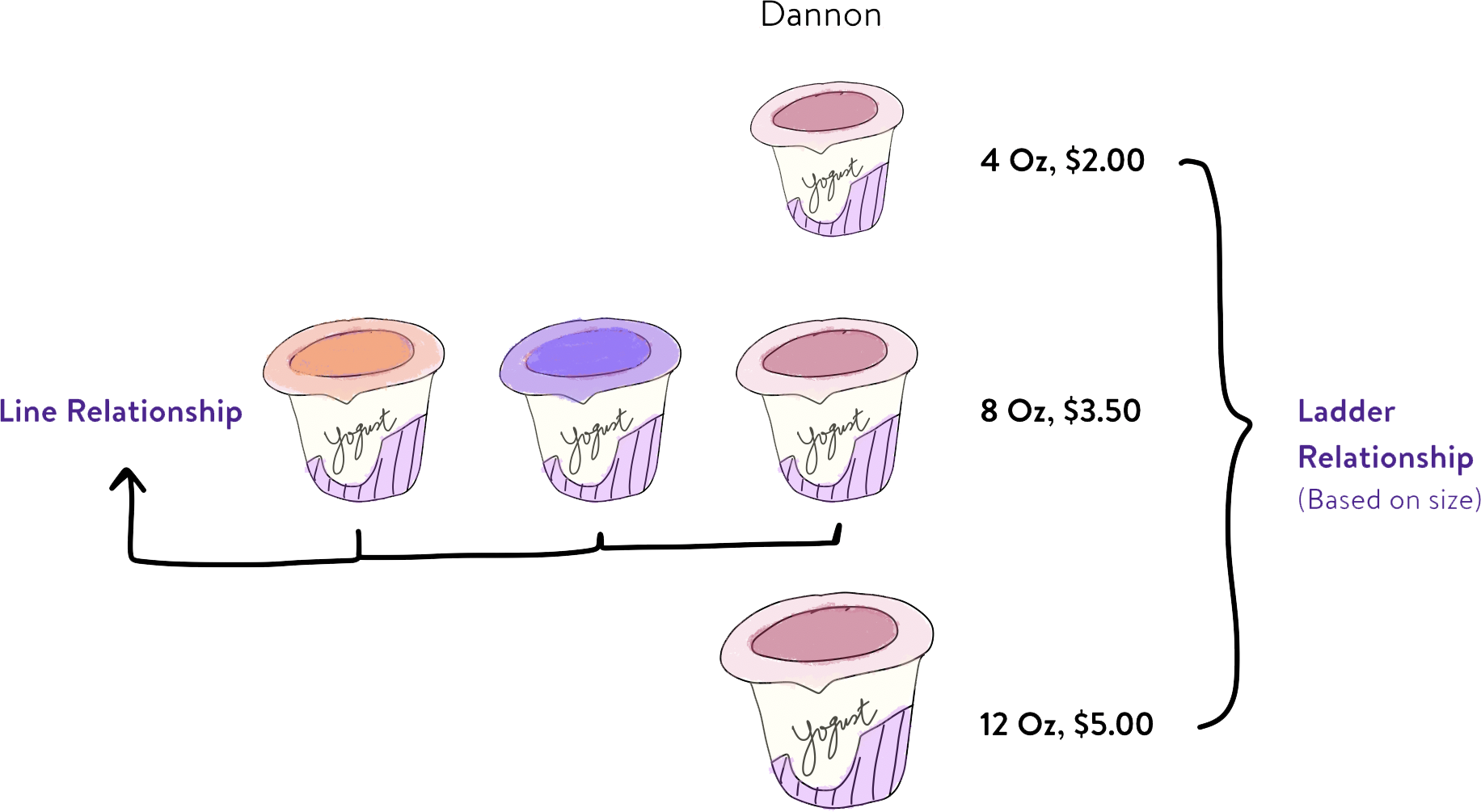
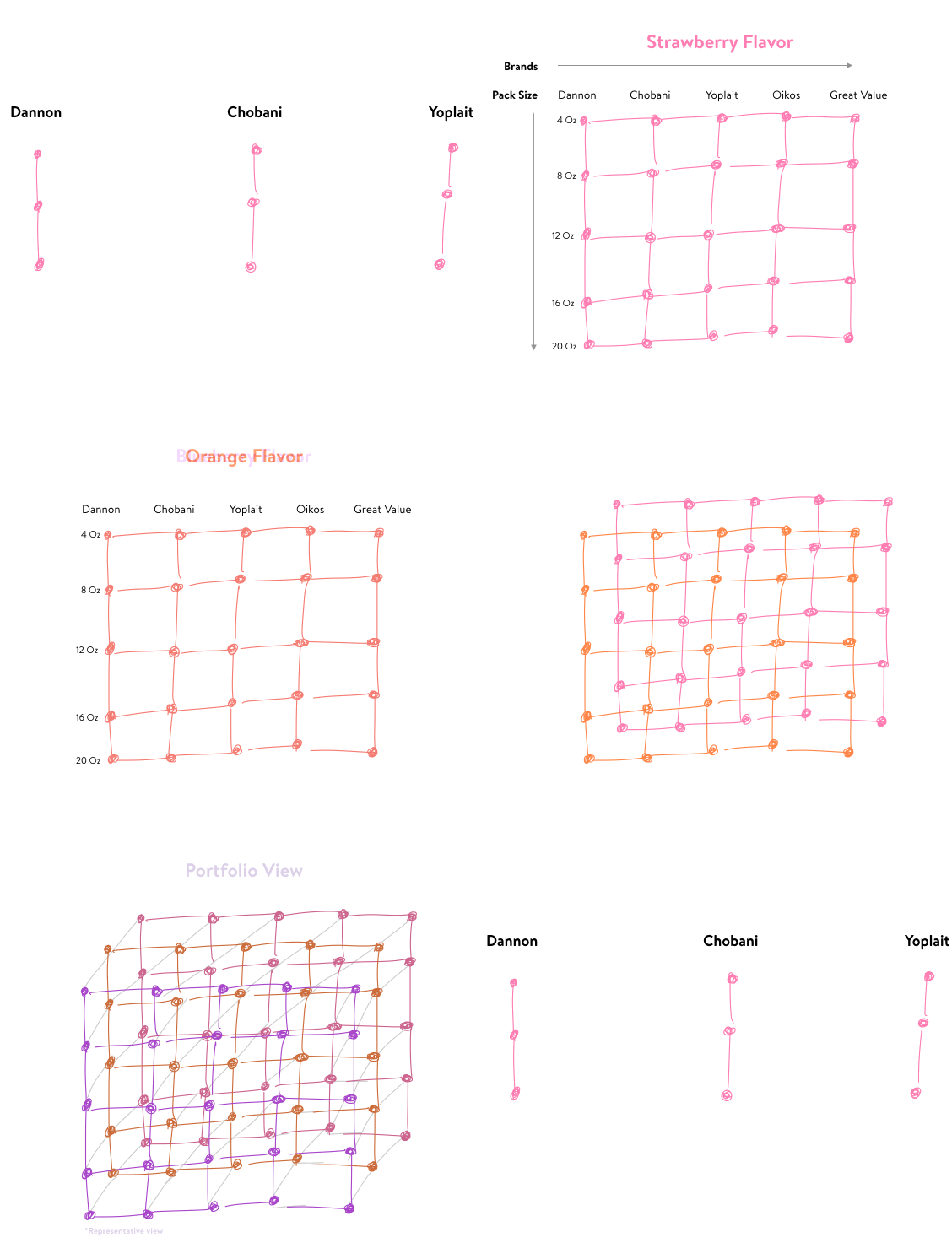
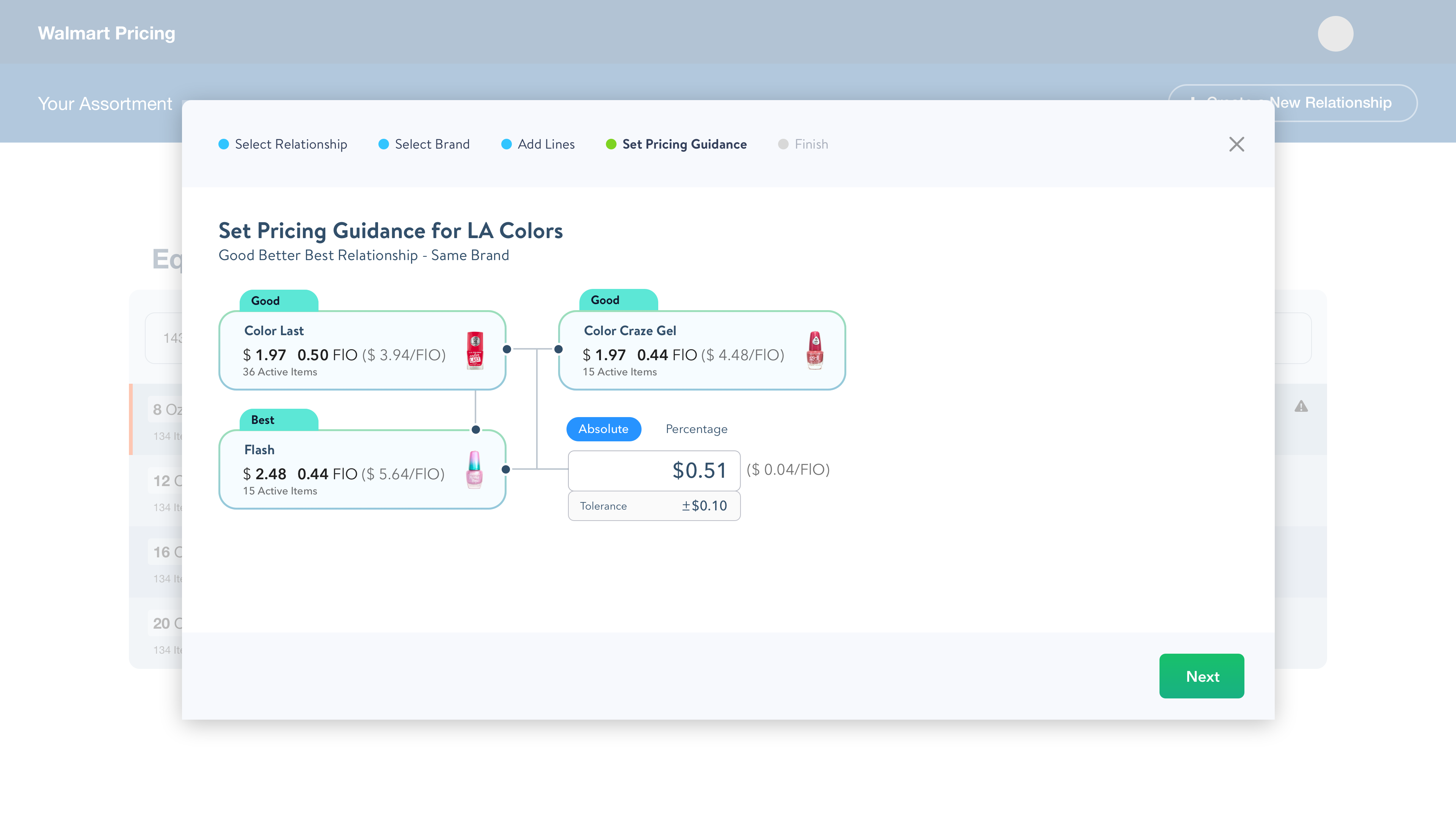
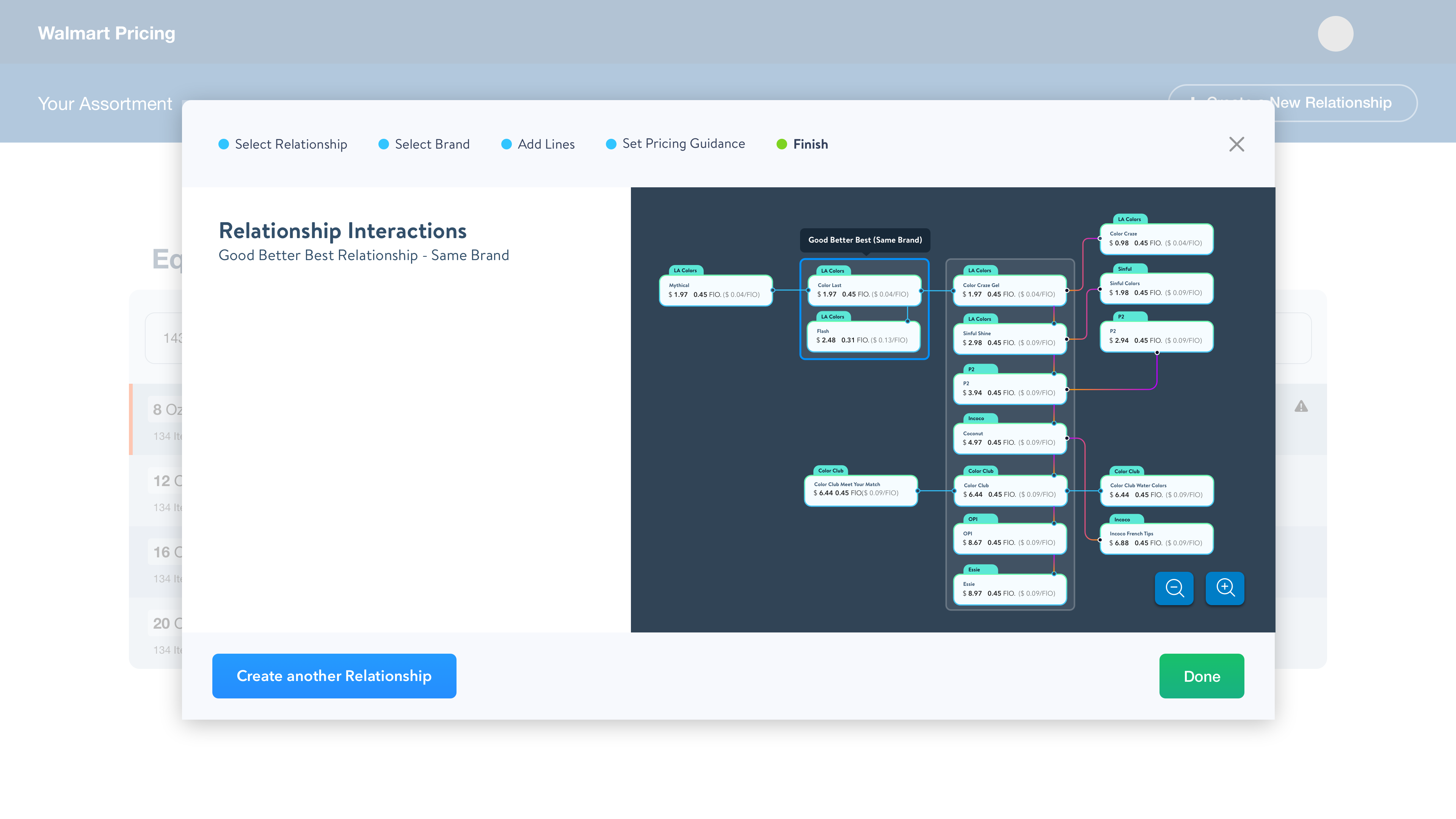
I used a yogurt portfolio to understand the underlying hierarchy. A portfolio can include brands, flavors, pack sizes, and families. The relationships between these items are expressed as lines and ladders: ladders often represent pack-size rungs, while lines represent variations like flavors. When one price changes, related prices may need to propagate in a consistent way.

User research
Shadowing was the obvious first idea, but almost no buyer was using the existing Item Linking Tool often enough for observation to be useful. Two in-situ site visits did not reveal much, so I shifted toward structured interviews with open-ended prompts.
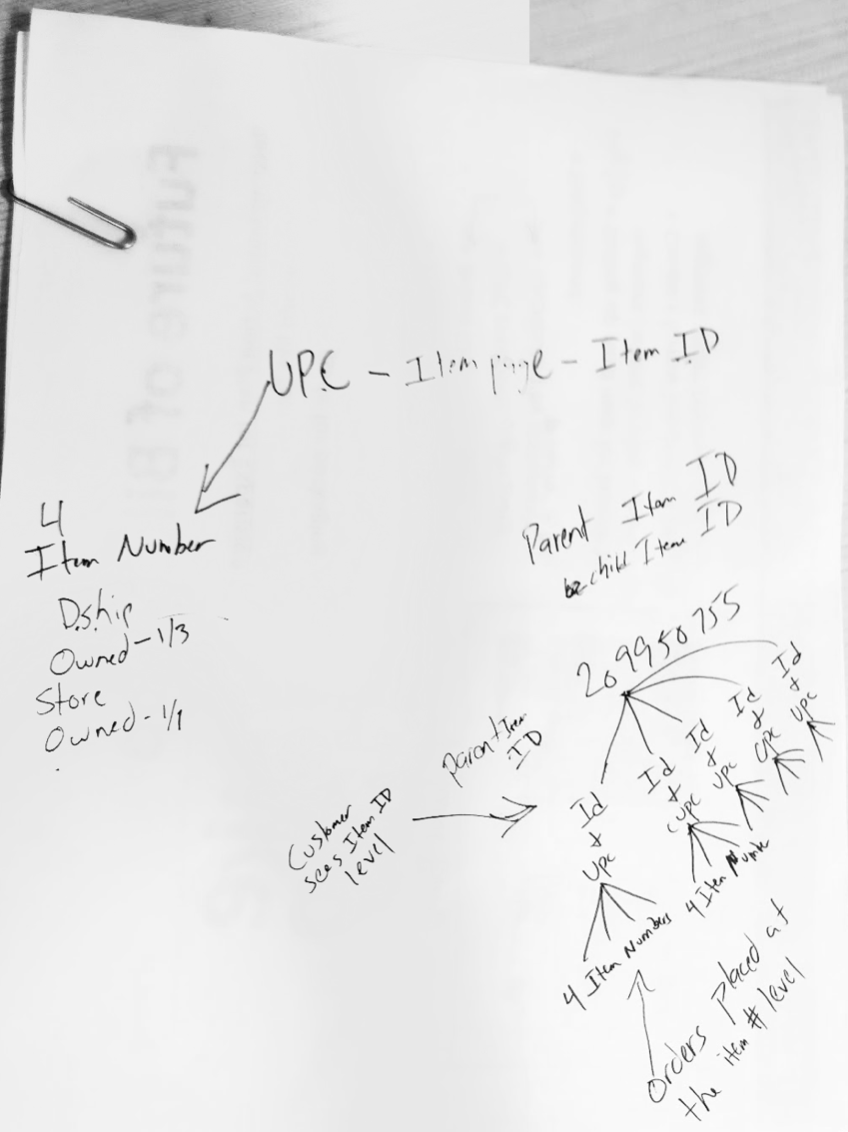
The most useful technique was asking buyers to explain their work like I was five. It forced jargon into plain language and helped uncover how they actually thought about price relationships. I also asked buyers to draw the relationships inside their portfolios, which made invisible mental models easier to compare.

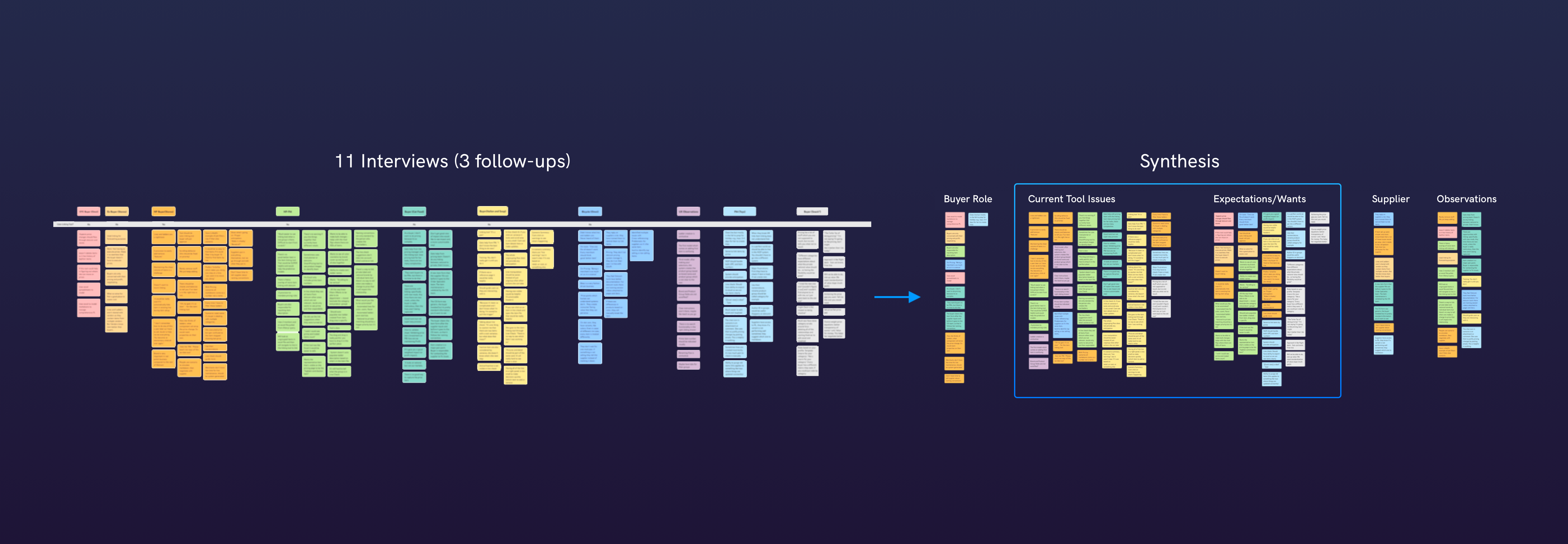
Synthesis & findings
Finding 1
Ladder creation did not match buyer thinking
"What component will drive the price change?"
The existing Item Linking Tool asked buyers to configure relationships in a technical way. Buyers thought in terms of portfolio strategy, product hierarchy, and what should move together when a price changed.
Finding 2
One-size-fits-all ladders were too rigid
"Every Buyer should have Good-Better-Best ladders."
Good-Better-Best was a useful pattern, but categories varied widely. A yogurt portfolio behaved differently from electronics, apparel, or seasonal goods, so buyers needed flexible relationship types.
Finding 3
Buyers needed confidence before pulling the trigger
"Because it's been so complicated and I don't know what I'm doing, I'm scared to pull the trigger."
Pricing decisions had broad downstream impact. The tool needed to show guidance, explain consequences, and help buyers understand nationwide impact before committing.
Solution direction
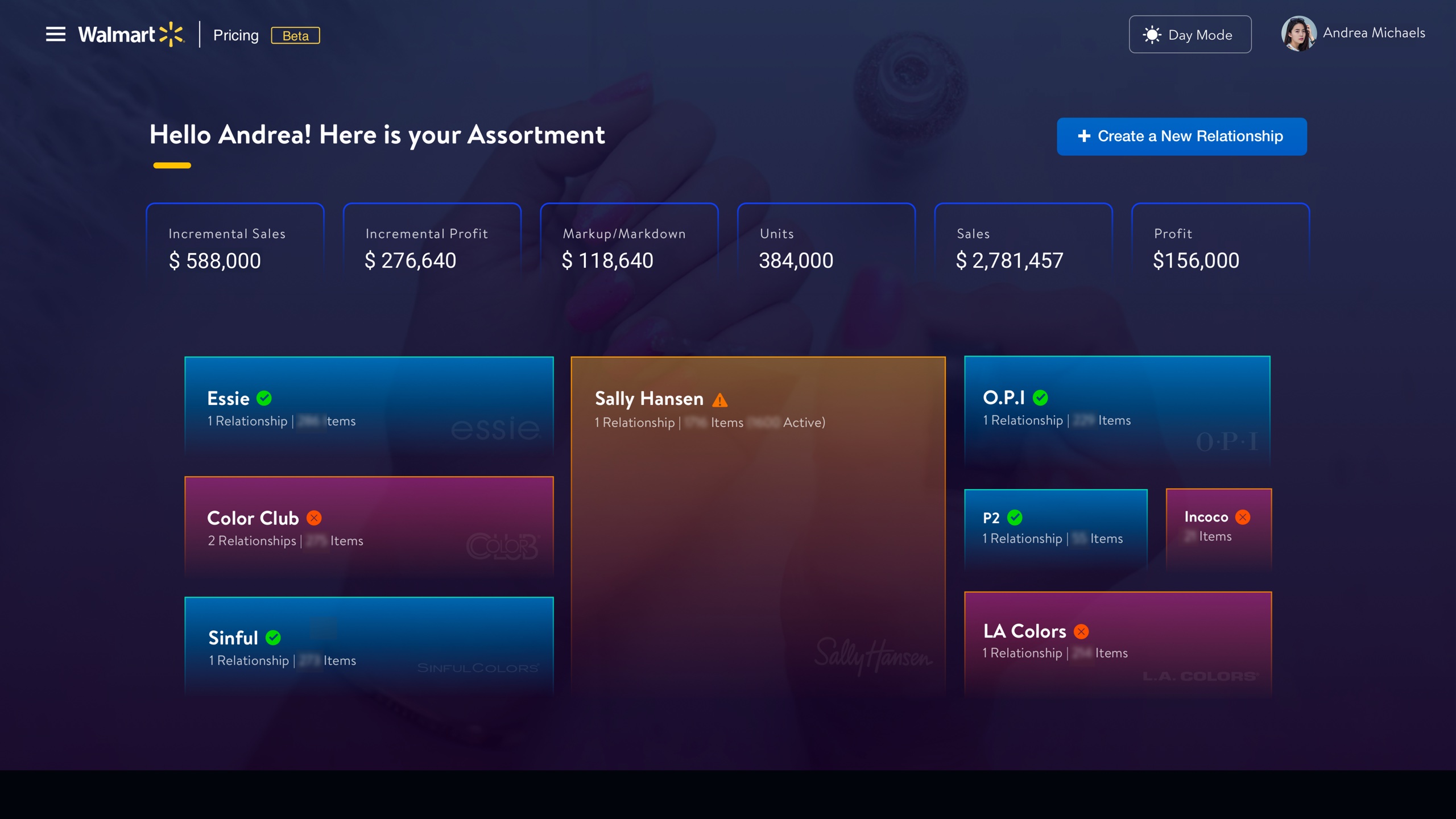
The final concept focused on helping buyers move between portfolio understanding, relationship creation, and pricing action without losing context. The interface did not try to flatten complexity. It staged complexity so buyers could make decisions with more confidence.
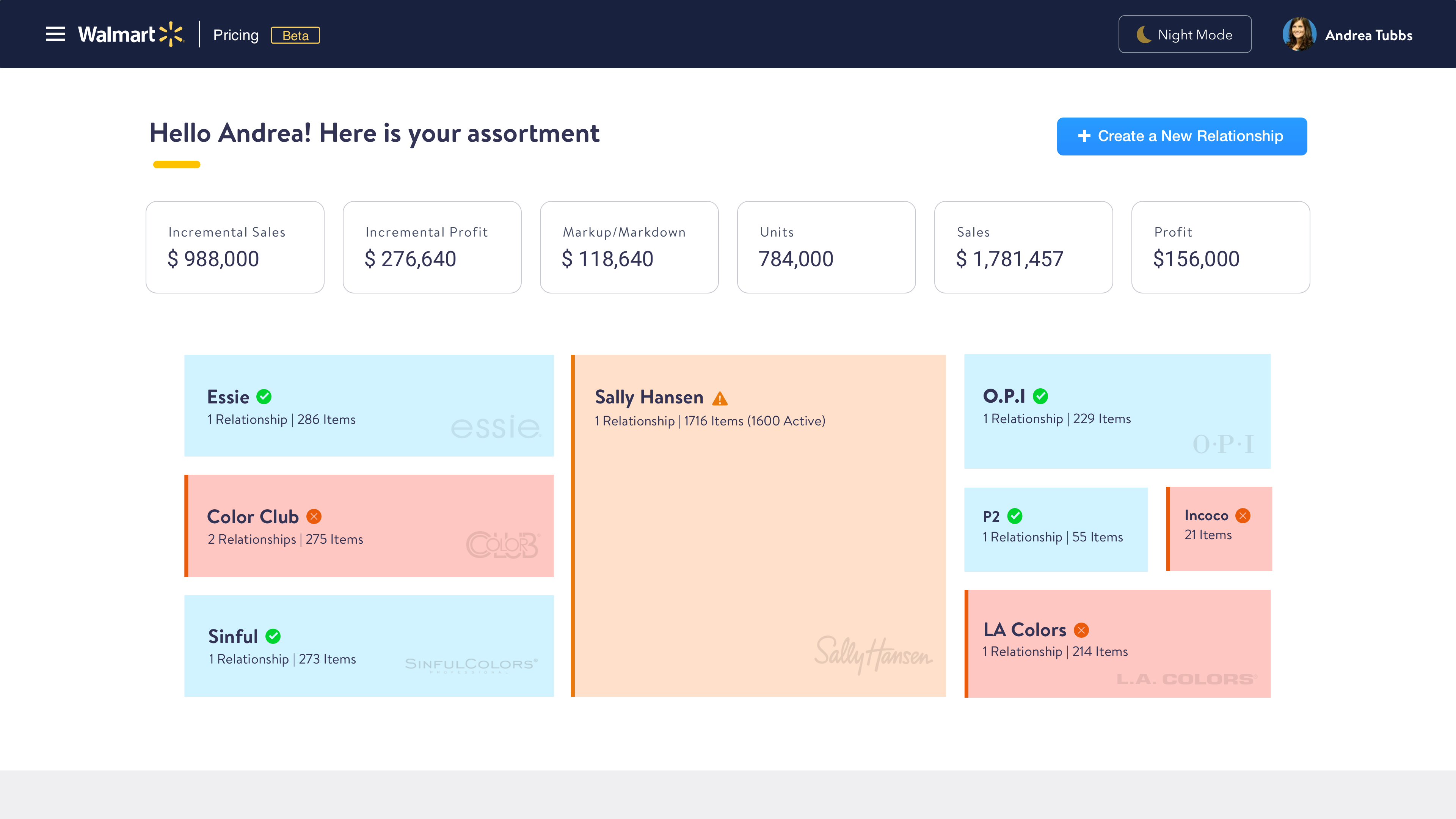
Replicate the store in the dashboard
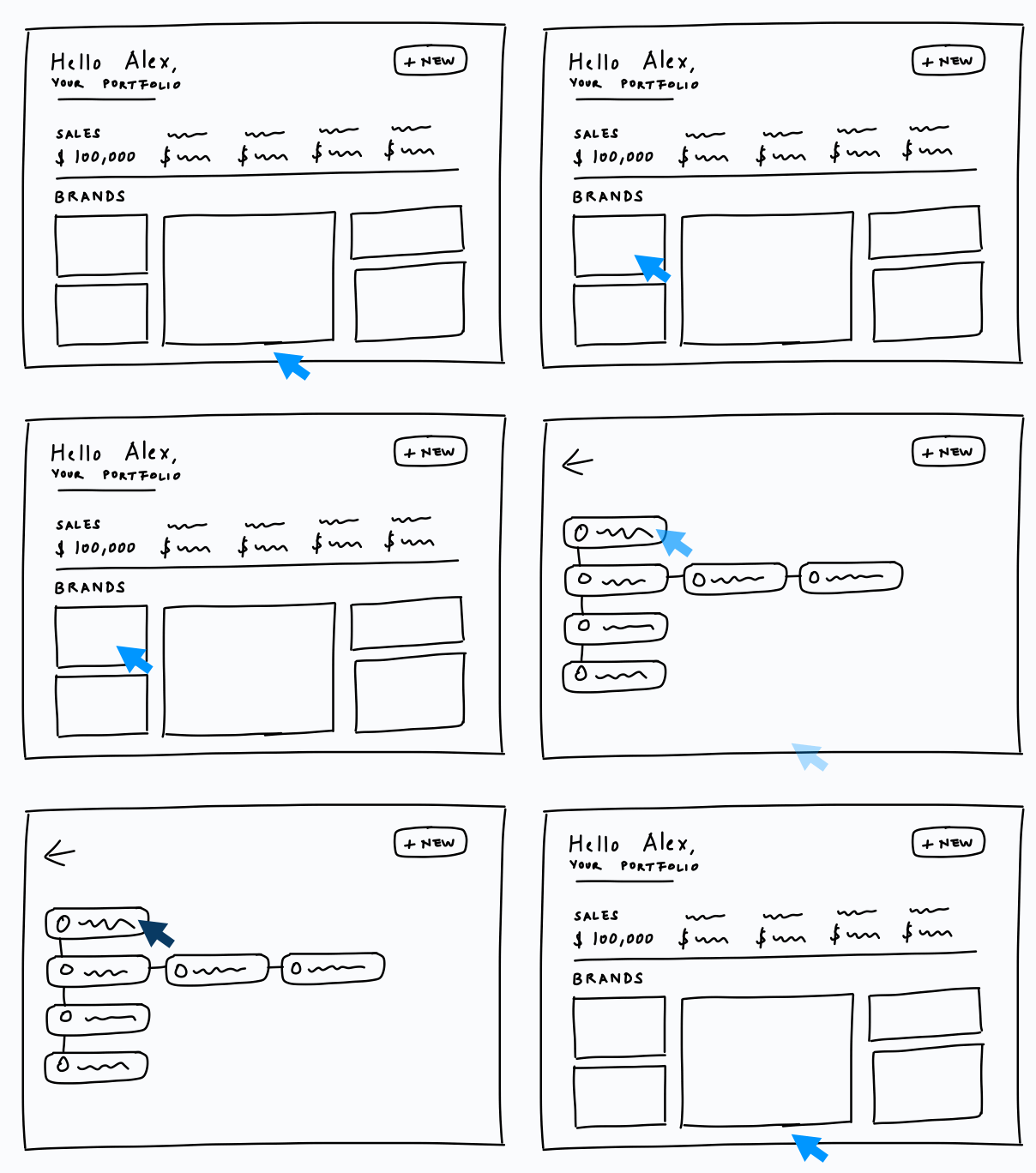
Instead of starting from abstract data tables, the dashboard organized portfolio information in a way that resembled a physical Walmart store: category, brand, family, item, and relationship detail progressively revealed as buyers moved deeper.
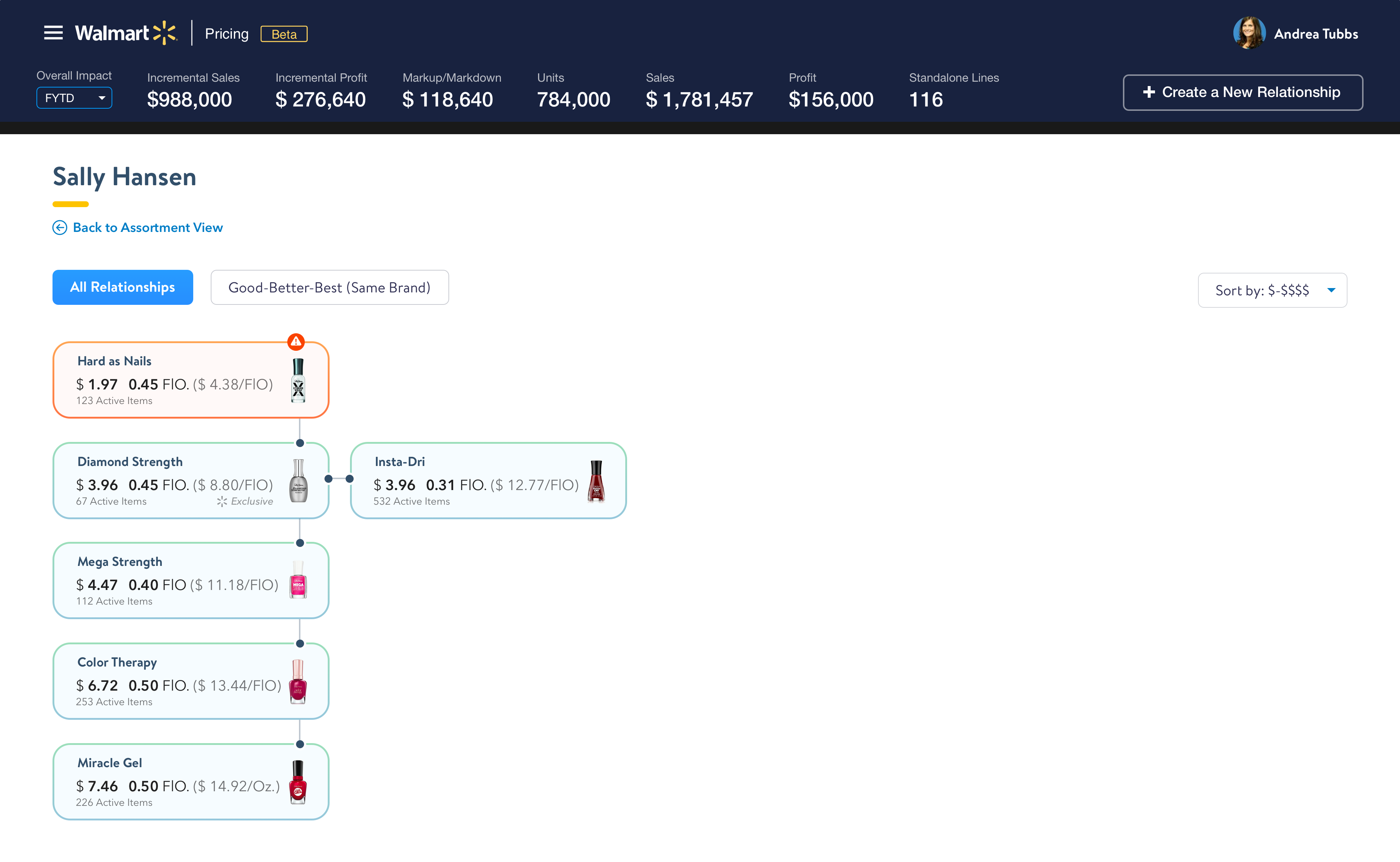
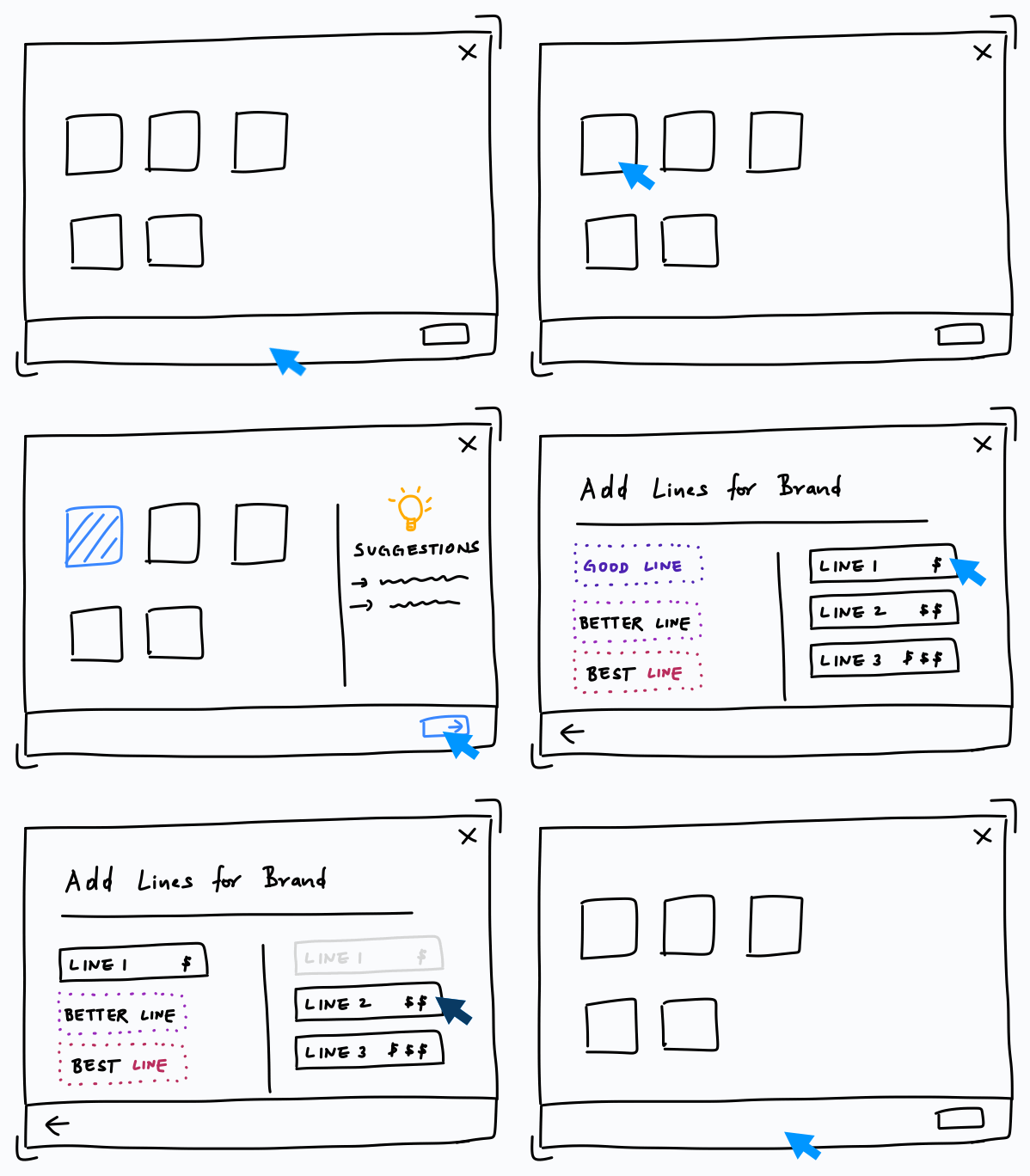
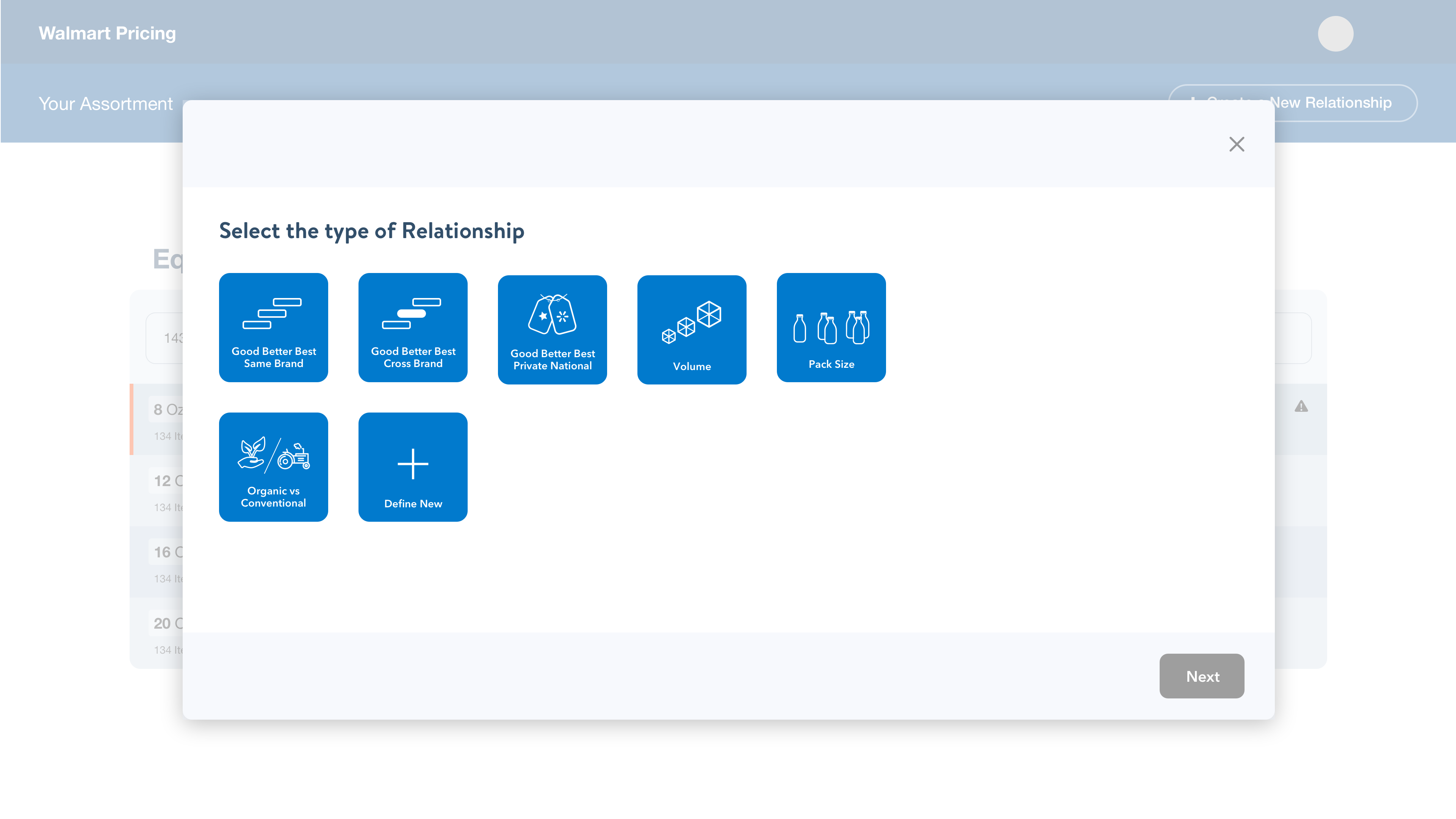
Make lines and ladders customizable
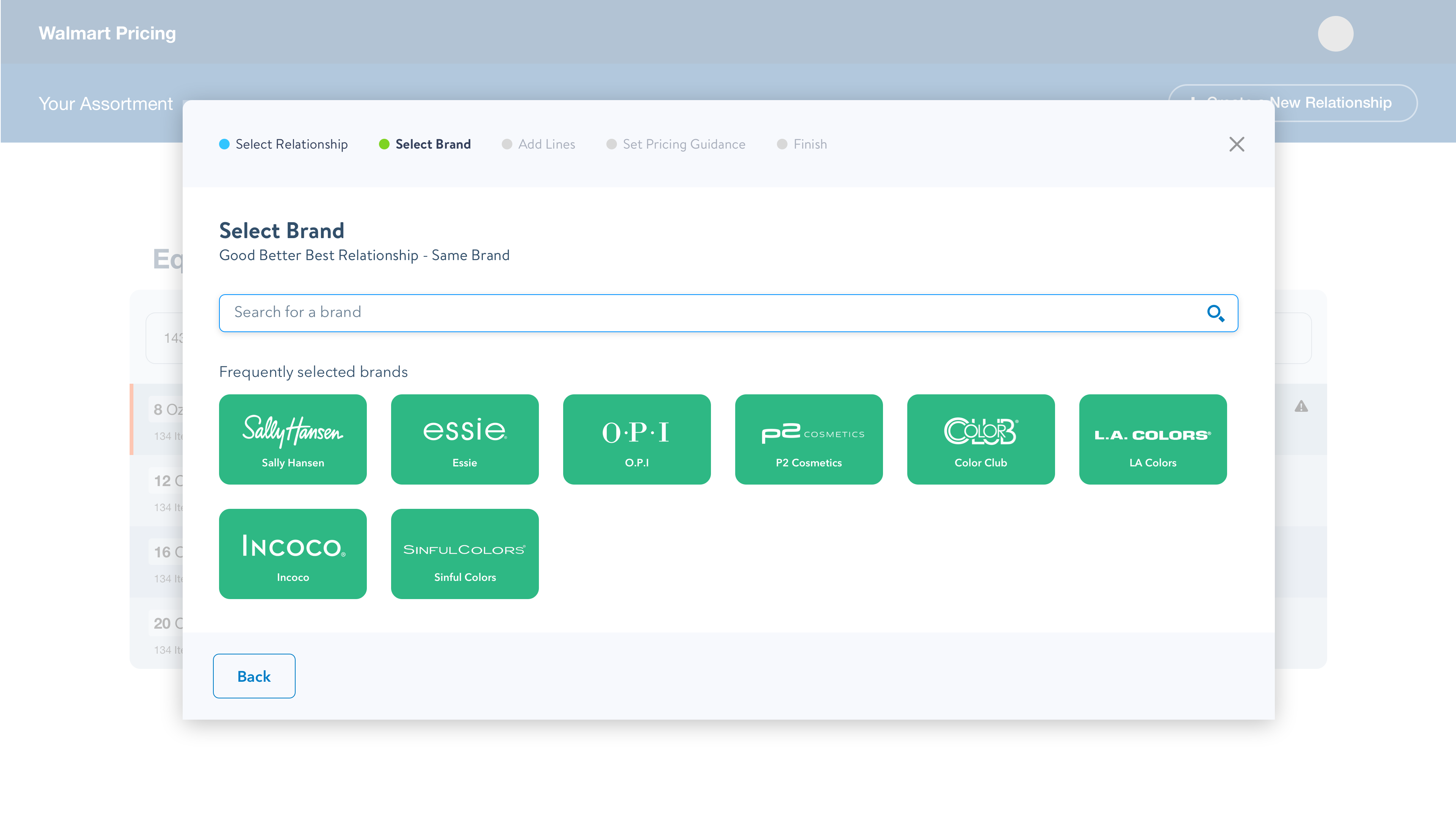
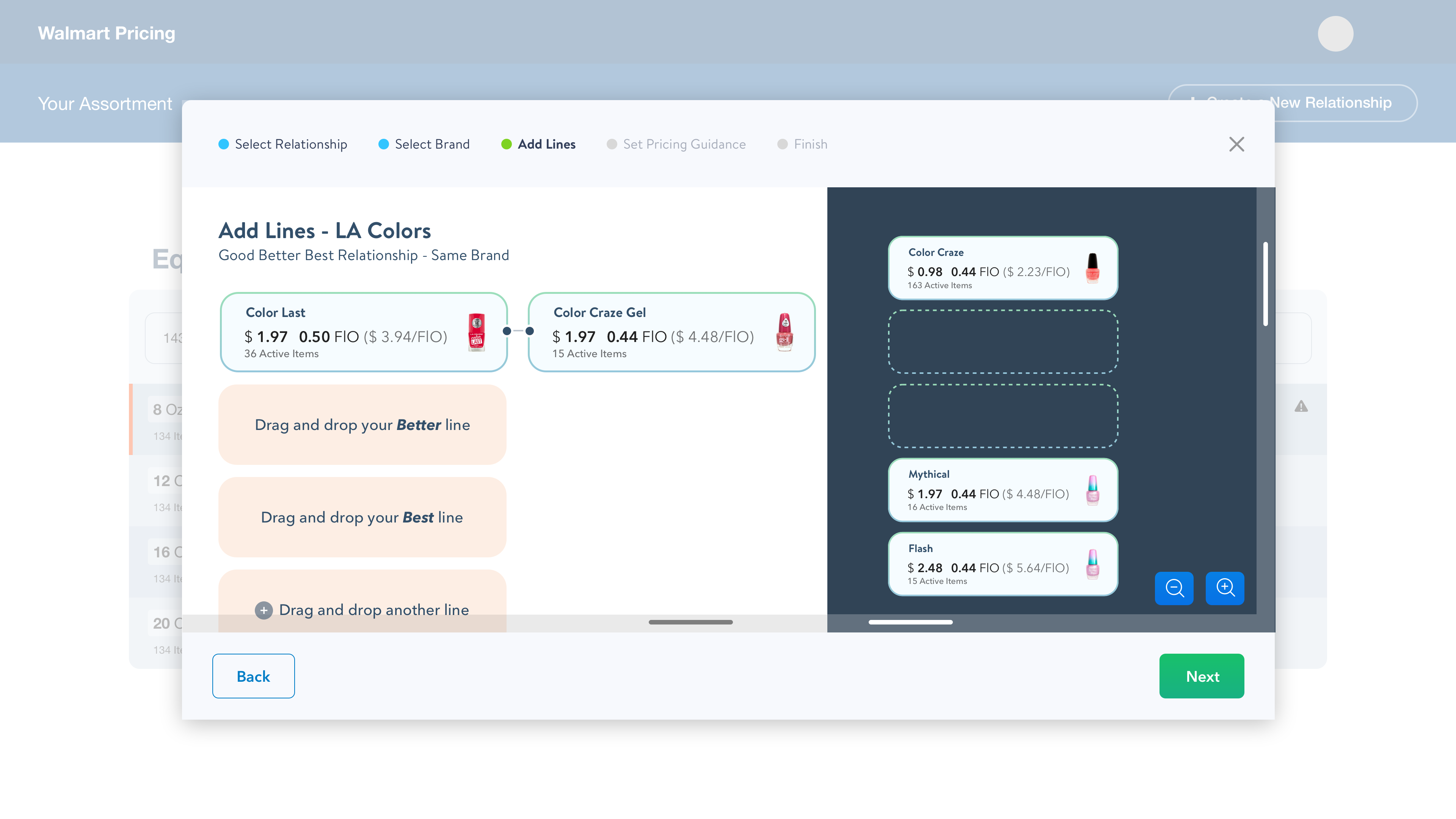
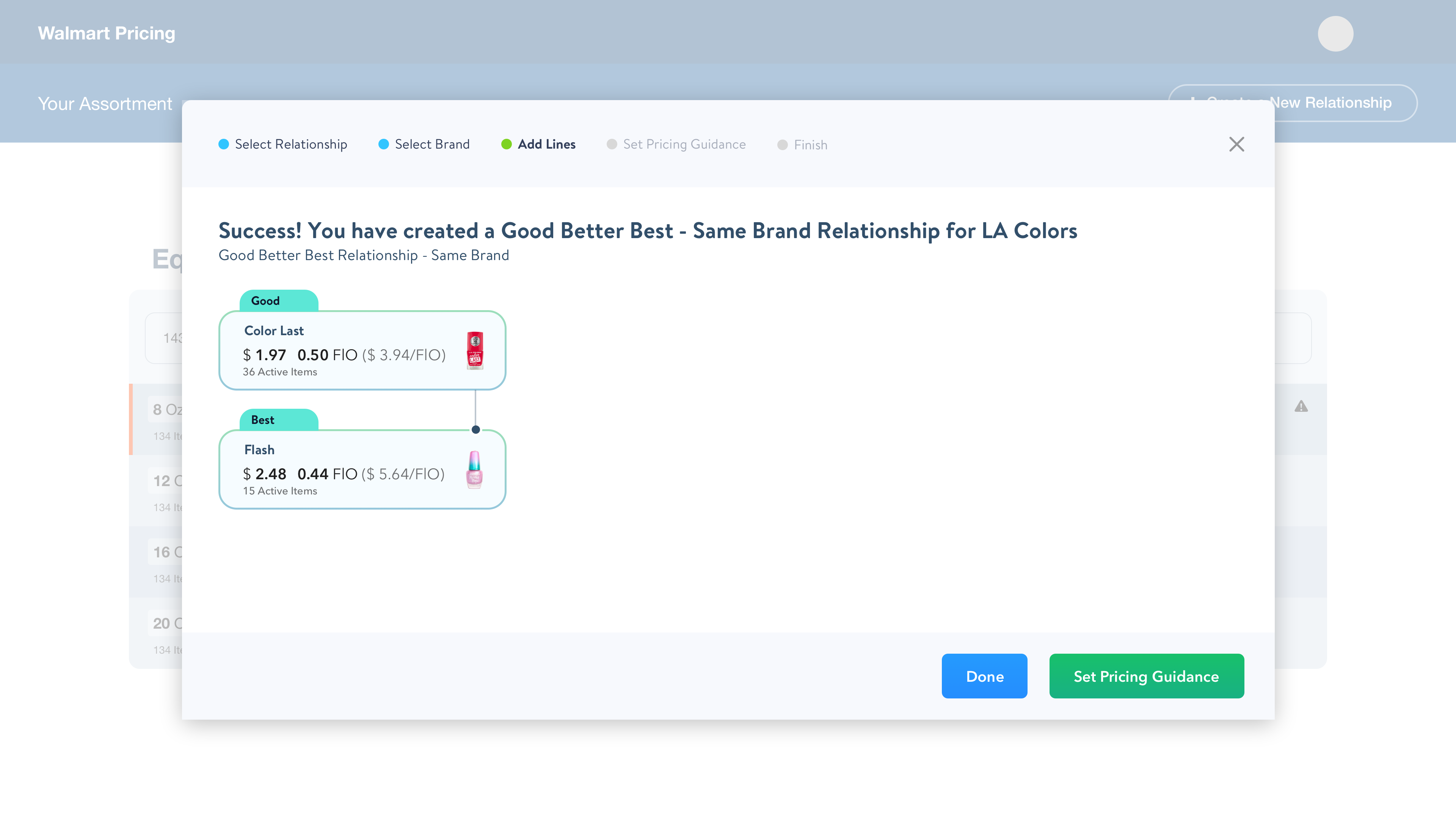
I designed a wizard-like flow for creating relationships. Buyers could choose the relationship type first, then get contextual guidance for what the tool needed and what would happen after the relationship was created.
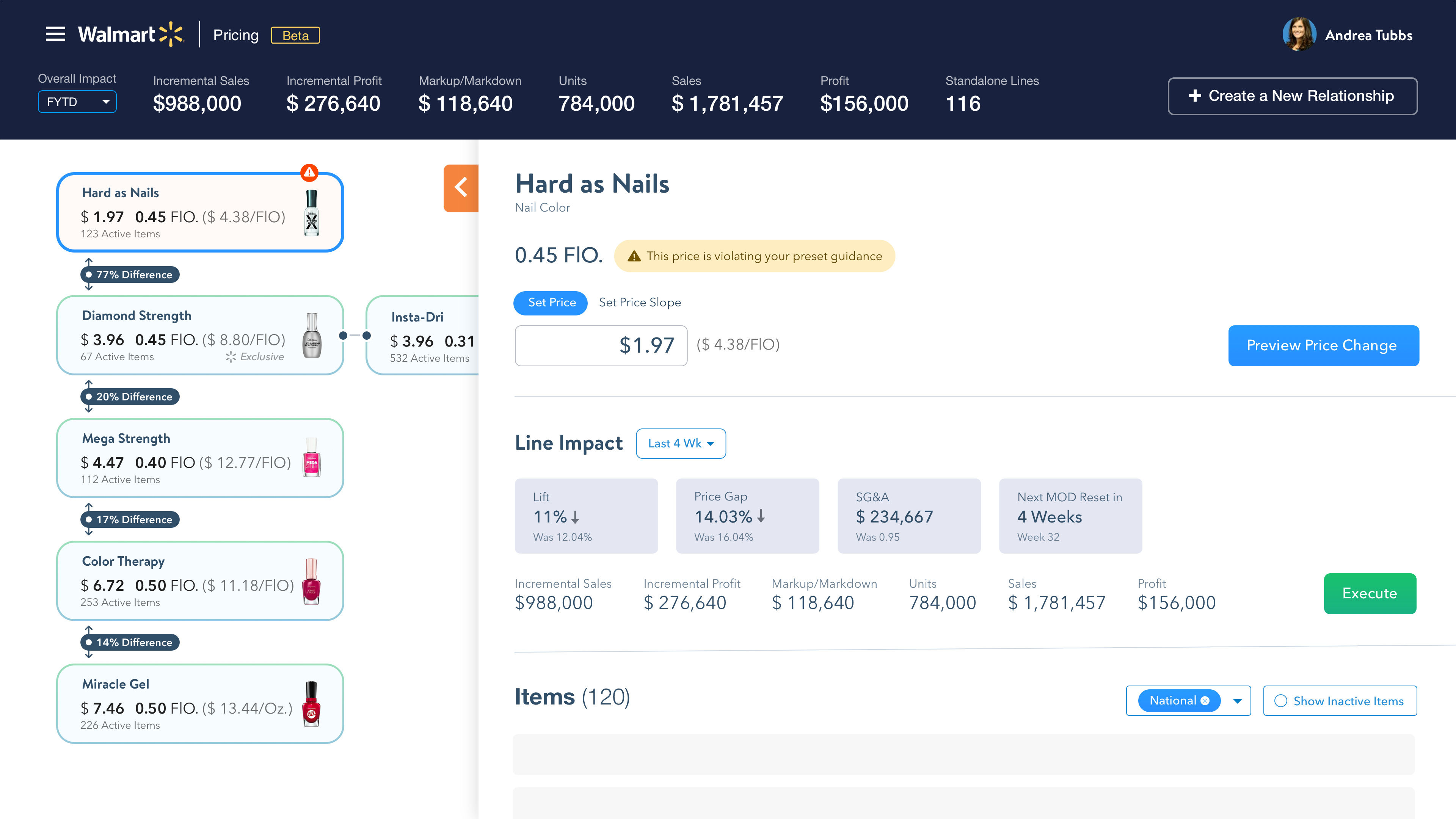
Show impact before action
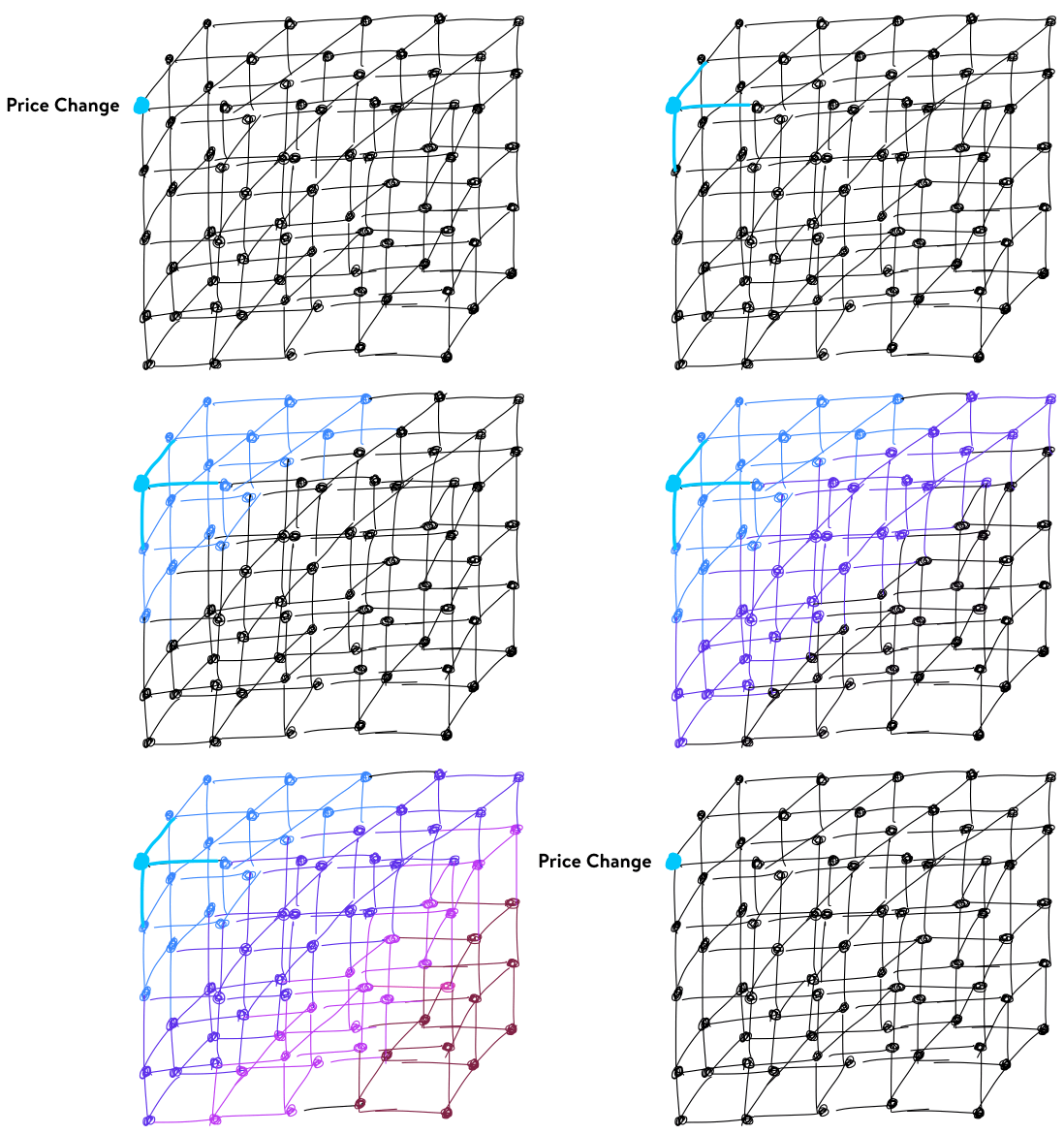
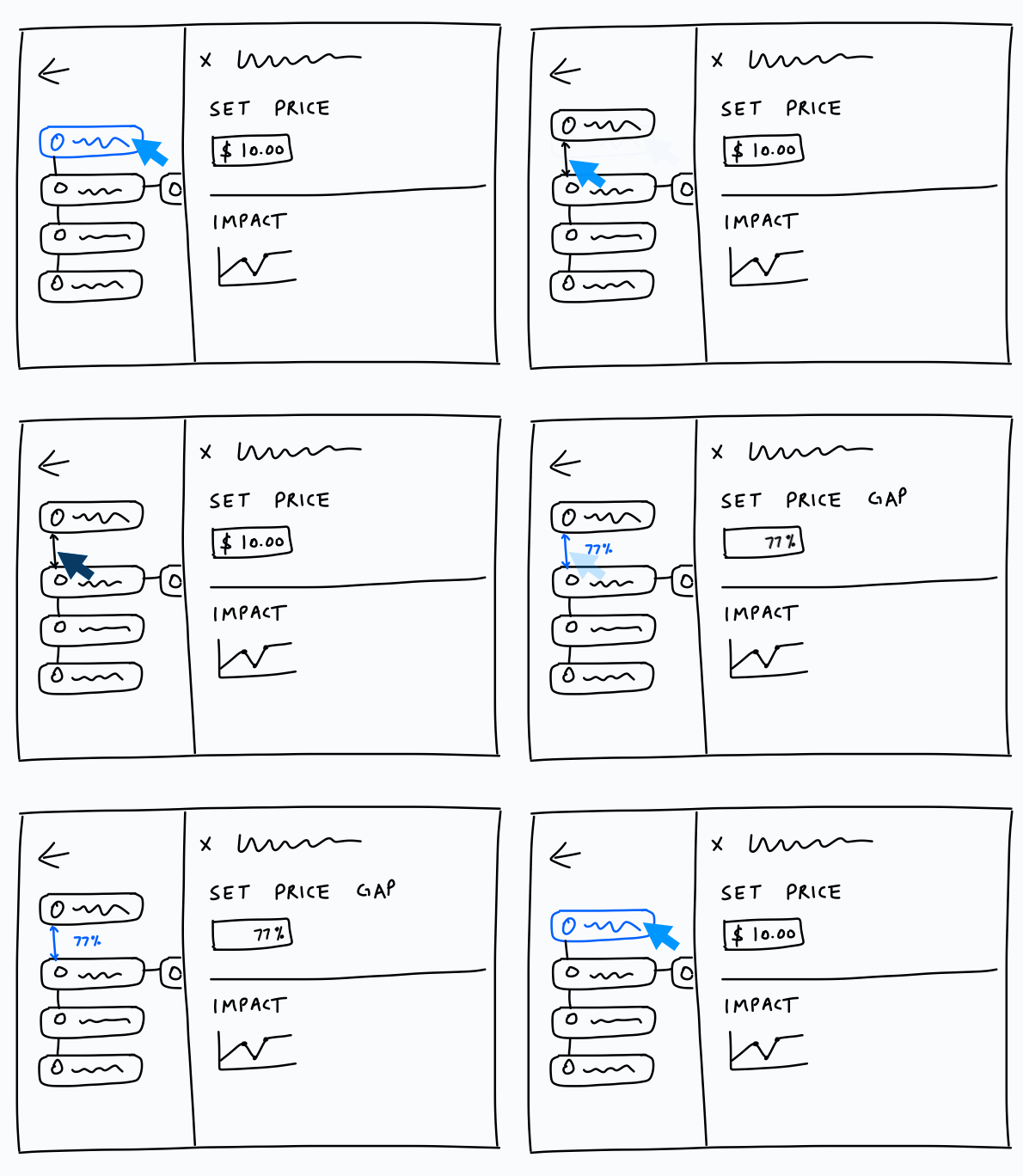
The concept let buyers change a price or price gap and immediately see expected impact. This addressed a need that buyers had not cleanly articulated, but that appeared repeatedly in interviews: they wanted to understand consequences before making changes at scale.
Learnings
Domain fluency changes the research
Many of the best follow-up questions only became visible once I understood the business context. The project taught me to earn enough domain fluency before treating an interview protocol as complete.
Complexity is not the enemy
Buyers did not need a simpler problem. They needed the right structure, guidance, and preview states so they could reason through a complex system without fear.
Prototype fidelity has limits
InVision was useful for directional testing, but real pricing workflows depend on real data. The work made clear where clickable prototypes stop being enough for enterprise decision systems.